Showing posts with label gerard manley hopkins. Show all posts

Monday, April 1, 2024

National Poetry Month / NaPoWriMo / Poem-a-Day 2024


Welcome, friends. I suspect there may be new visitors to the blog today because of my recent appointment as Poet Laureate of Iowa. Greetings to all, readers old and new.

I should begin by telling you what I do here in April. I participate each April in the Poem-a-Day Challenge and NaPoWriMo (which stands for "national poetry writing month"). In these projects, the poets Robert Lee Brewer and Maureen Thorson provide prompts to help people write a poem each day in April. My modus operandi is to compose a poem that arises from (and satisfies) both prompts. I have done this every April since 2012, so this will be my 13th year. My poetry collection The Coolest Month is made up of April poems written this way. More on that book at the end of this blog post.

One change from recent years . . . for almost every April since 2014, my friend Thomas Alan Holmes has also participated, similarly merging prompts and then letting his poems be featured in the blog. This month, Alan has to bow out. His duties as an associate dean at East Tennessee State University will keep him too busy. We'll miss you, Alan. I hope you can join me next April.


Okay, here we go. For the first day of NaPoWriMo Maureen Thorson’s prompt is “[W]rite – without consulting the book – a poem that recounts the plot, or some portion of the plot, of a novel that you remember having liked but that you haven’t read in a long time.”

Robert Lee Brewer’s Poem-a-Day suggestion is “[W]rite an optimistic poem.”

Grendel
—curtal sonnet
One of my favorite novels from undergrad
was John Gardner’s Grendel, the story of the monster
in Beowulf, told by the monster himself. The plot

was preordained by the poem: Grendel had
to die. He saw himself not as a monster
but as a poet “brachiating with a hoot

from rhyme to rhyme.” He was an optimist
of sorts — “I am mad with joy” — until his mother
shook his glee with a word not understood:
warovvish — beware of fish. Her gist?
                                The skies warn of your death.

—Draft by Vince Gotera    [Do not copy or quote . . . thanks.]


Emil Antonucci, illustration from Grendel, first edition.

I think I was successful here in melding the two prompts, but there was quite a lot to squish into the small space of the curtal sonnet form. Without giving too much away, in case you haven't read Grendel, the chapters of the novel are linked to the signs of the zodiac, which might begin to make sense of the fish reference. Grendel's mother is seen in the novel as a dumb, hulking, wordless brute, as perhaps you might have seen Grendel himself in the context of the Beowulf poem, but her prescient word warovvish argues otherwise. I'll stop there. Go read the novel . . . I guarantee you'll love it.

For those who might not know the curtal sonnet: this poetic form was invented by the 19th-century poet Gerard Manley Hopkins to be 3/4 of a 14-line sonnet, thus 10.5 lines. The rhyme scheme is abc abc dbcdc. I'm using pentameter — five-beat lines — rather than the sprung rhythm that Hopkins employed. I write curtal sonnets quite often, actually. I find the poetic challenges of the form enjoyable.


I mentioned above my most recent collection The Coolest Month (2019). This chapbook's "spine" is the April calendar, with a poem for each day in April, where that poem was written on that April day in the previous eight years. For example, for April 13, the poem is "Sestina: Dragon," originally written on April 13, 2014, merging two NaPoWriMo and Poem-a-Day prompts. Here is an interview about that book in the website of the publisher, Final Thursday Press. The book is available on Amazon, but if you would like a signed copy, you can get one for $10.95 via check to “Final Thursday Press,” 815 State St., Cedar Falls IA 50613.


Friends, won’t you comment, please? Love to know what you’re thinking. Thanks!

Ingat, everyone.  ヅ 


NaPoWriMo / PAD 2024 • Pick a day:
1 2 3 4 5 6 7 8 9 10 11 12 13 14 15 16 17
18 19 20 21 22 23 24 25 26 27 28 29 30


Sunday, April 10, 2022

Day Ten ... NaPoWriMo / Poem-a-Day 2022


Maureen Thorson’s NaPoWriMo suggestion: “Today’s (optional) prompt is pretty simple — a love poem!”

Robert Lee Brewer’s Poem-a-Day suggestion: “For today's prompt, write a taste poem.”

Today's poem merges the two prompts in what I hope are unusual or at least unexpected ways. Yesterday, I gave a talk on "Writing in Short Forms" — hay(na)ku and curtal sonnets — for Writer's Digest University, so I wanted to write a curtal sonnet today, in case some of those who attended might swing by. For those who may not know, the curtal sonnet, invented by Gerard Manley Hopkins, is 3/4 of an Italian sonnet (10 1/2 lines), rhymed abcabc dbcdc.

Ode to Chicharon

Slices of heaven, fried pork fat and rind,
pork belly chicharon, just like Mama
made. I could smell them in my room above
the kitchen. I was probably six, kind
of a book nerd, imagining drama:
the taste of that meat, gold curlicues of

smoke and salt flavors caressing my tongue
like huge bells enfolding Esmeralda
in Quasimodo’s unrequited love.
But for this little boy, a greater thing:
                                        my mother’s love.

—Draft by Vince Gotera    [Do not copy or quote . . . thanks.]

As a child, I loved the Classics Illustrated comic books and had The Hunchback of Notre Dame. I can still envision in my mind panels from that comic, and I remember being bemused by the villain's name, Phoebus, which seemed to me not only unusual but also interesting because my aunt was engaged to a guy named Phoebus.

My love of pork — and especially pork belly — goes back to my mother making chicharon, my favorite snack. This is different from the chicharrones we have in the US; the Filipino chicharon is thicker, with more layers of goodness, more meat and fat attached to the skin. And yes, in the Filipino word chicharon there is only one R, as opposed to the Spanish chicharrón.


Did you think that was a picture of pork belly chicharon? They're actually chicharon keychains! While looking for pictures of chicharon online, I discovered there is such a thing as food keychains! Don't they look good enough to eat? Anyway, today, because of my mom's chicharon, I love extra thick bacon and pork sausage, especially linguica. As an aficionado of pork, I'm lucky to live in Iowa, where the culinary mainstays include huge breaded pork tenderloin and the one-inch thick Iowa chop!


Friends, won’t you comment, please? Love to know what you’re thinking. Thanks!

Ingat, everyone.  ヅ 


NaPoWriMo / PAD 2022 • Pick a day:
1 2 3 4 5 6 7 8 9 10 11 12 13 14 15 16 17
18 19 20 21 22 23 24 25 26 27 28 29 30


Sunday, April 3, 2022

Day Three ... NaPoWriMo / Poem-a-Day 2022


Maureen Thorson’s NaPoWriMo prompt today calls for “a Spanish form called a 'glosa' — literally a poem that glosses, or explains, or in some way responds to another poem. ”

Robert Lee Brewer’s Poem-a-Day suggestion: “For today's prompt, write a smell poem.”

Today, however, I'm "going rogue" (as my poet friend Thomas Alan Holmes calls getting off the prompts). Not feeling the love from either of these prompts. Instead, I am writing about a sculpture on the University of Northern Iowa campus: Balanced/Unbalanced Beaks by Fletcher Benton (1993). Here's a pic I snapped recently of this striking masterpiece.
The sculpture is 15 feet tall and 12 feet wide, weighing in at 3,500 pounds, and costing $76,000 in 1993 when it was installed (according to the university archives). I have wanted to write about this sculpture since I started working at UNI, just a couple of years after it arrived on campus.

The poetic form I am using today is the curtal sonnet, invented by Gerard Manley Hopkins — 3/4 of a sonnet in length and structure.

Conspiracy Theories
Balanced/Unbalanced Beaks
by Fletcher Benton (1993)
Did a giant child drop a toy, red hoop
and stick, frozen forever, spinning yet
also standing still? Shards of vermilion

shrapnel fixed in air, a wild gyroscope.
Into an angry sky, strange banners lift
muffled alarums, a million alien

warriors landing their spaceships. But surely
not? Just some welded metal in concrete,
you say. Are you sure? A space invasion
could never happen, right? Fake news, clearly.
                                      Or is it a warning?

—Draft by Vince Gotera    [Do not copy or quote . . . thanks.]

Here are some more of my photos of the Benton sculpture.
I'm always struck by the strident color of this sculpture as well as the fascinating perspectives you get walking around it. It's infinitely entertaining and mysterious.


Friends, won’t you comment, please? Love to know what you’re thinking. Thanks!

Ingat, everyone.  ヅ 


NaPoWriMo / PAD 2022 • Pick a day:
1 2 3 4 5 6 7 8 9 10 11 12 13 14 15 16 17
18 19 20 21 22 23 24 25 26 27 28 29 30


Tuesday, April 14, 2020

Day 14 ... NaPoWriMo / Poem-a-Day 2020


Robert Lee Brewer’s Poem-a-Day prompt is the usual "Two for Tuesday":
1. Write a form poem.
2. Write an anti-form poem.
Maureen Thorson’s NaPoWriMo prompt: “write a poem that deals with the poems, poets, and other people who inspired you to write poems. These could be poems/poets/people that you strive to be like, or even poems, poets, and people that you strive not to be like. There are as many ways to go with this prompt as there are ways to be inspired.”


Alan today satisfies both prompts with a Petrarchan sonnet. Bravo!

I find my Jackself, Father Hopkins, here


I find my Jackself, Father Hopkins, here
beneath the lip of concrete walk, the nest
that’s blown from that whipped cherry tree, the best
that I can tell, some feathers still stuck there
where hatchlings fouled then flew and now somewhere
begin their nests and broods. What downy breast,
what shelter, wing or setting hen, professed
through watchful action God’s own watchful care?
Now watch me care, inadequate and lost,
just housed, just fed, not comforted but kept
away from friends and music. If I brood,
then I am selfish, focused on the cost
of keeping others from me safe; accept,
O Lord, my shame, my penitential mood.

—Draft by Thomas Alan Holmes    [Do not copy or quote . . . thanks.]


Check out Alan's book on Gerard Manley Hopkins, The Fire That Breaks: Gerard Manley Hopkins's Poetic Legacies, edited by Daniel Westover and Thomas Alan Holmes.


My poem today addresses all three prompts, the two form/not-form prompts and also the poet tribute prompt.

The Ballad of Emily and Walt:
Synergic Sonnet Not-Sonnet


Walt, you Granite huge Grizzly
    of a Man – your Pen swirls
through air and over Paper — truly
    and widely Transcendental!

Ah yes, Emily, Amherst's resident angel, your pen adorned with feathers plucked
    from an amorous swan, floating and swimming in these American continental
    waters, your pen streams a flowing yawp of illumination, energy, and spark

Through heaven's firmament, the moon's curling path through the stars, the swash
    and buckle of the planets, great wanderers through the obsidian bowl of the sky,
    the grand orbit of Apollo and his chariot as the almighty sun,

Through the sweeping vistas of the expansive prairies and massive mountains
    of this superlative land, the eagles, and the passenger pigeons, flying across the
    cerulean dome of the Divine's aerial dominion, the birds of the ground, the ostrich
    and the penguin, the hummingbird and the hawk, the nightingale and the lark,

Through the aquamarine and indigo depths of the seas and lakes, the swirling schools
    of finned creatures, the shark, the albino whale, the miniature minnow, the
    many-tentacled octopus, the serpent-bodied and sinuous eel, the folk of the
    burbling creeks, the swift rivers, the broad Mississippi, the ocean.

Yes, the bobolink my Diva
    sings in your Honor,
and the owl – Omnipotent chanter –
    croons a tune of Dolor.

The many and varied peoples of this vast republic extol bright praises to your verse,

The regalia-bearing Indians in their verdant woodland, the Irish blacksmith hammering
    blades in his forge on Long Island, the German farmers toiling in the black soil of the
    Middle West, the Chinese forty-niners in San Francisco all laud your words, from the
    rough-hewn cedar cradle to the gold-leaf filigree of the Stygian horse-drawn
    ultimate hearse.

—Draft by Vince Gotera    [Do not copy or quote . . . thanks.]


The way the form/not-form aspect of my poem works is like this: the form vibe is represented by the Dickinsonian hymnal stanzas, while the not-form feeling resides in the Whitmanesque long lines of free verse. If you consider the paragraph-like long lines as each one long line, then you'll see that the poem is a Shakespearan sonnet, sans meter.


Friends, won’t you comment, please? Love to know what you’re thinking. To comment, look for a red line below that starts Posted by, then click once on the word comments in that line. If you don’t find the word “comments” in that line, then look for a blue link below that says Post a comment and click it once. Thanks!

Ingat, everyone.  ヅ 


NaPoWriMo / PAD 2020 • Pick a day:
1 2 3 4 5 6 7 8 9 10 11 12 13 14 15 16 17
18 19 20 21 22 23 24 25 26 27 28 29 30


Wednesday, April 8, 2020

Day Eight ... NaPoWriMo / Poem-a-Day 2020


In today's NaPoWriMo post, Maureen Thorson talks about twitter accounts "that tweet phrases from different poets’ work," such as Plath and Shelley and even Vogon poets! Today's prompt suggests, “peruse the work of one or more of these twitter bots, and use a line or two, or a phrase or even a word that stands out to you, as the seed for your own poem.”

Robert Lee Brewer’s Poem-a-Day prompt: “write a future poem. The future is a never ending well of worry for some. Others harbor a great deal of optimism. Still others see a mixture of awesome flying cars and terrifying robot overlords. Regardless of your outlook, I hope there’s a poem in your very near future.”

Future News

When Rupert Murdoch’s sons inherit all
his empire and decide their name must be
redeemed, when they have turned the brand Fox News
into respected journalism, who
will start the next extremist outlet, poised
to cultivate a moneyed audience
so frightened for their privilege that they
will grasp at any vague explanation
repeated in hyperbolic shouting?

My dad picked up a saying in the Guard,
“as crazy as a shithouse rat,” that seems
to me the best name for that channel, when
the time comes for the casual, profane
term because it must preserve the very words
the President will utter, his third term
demented as his condition merits,
his core support normalized even more
than now, when his profiteering illness
cures and caging children are accepted.

I hope the owner of this channel has
a name that also sounds like something stuck
off a list that Rowling made, Hogwarts names
that seemed too gross at second thought, like “Moist”—
let’s call him Herschel Moist, of working class
but now a magnate, heartless as a pit
from a half-chewed desiccated prune spit
onto a china dish, imperfect smile
because veneers do not match exactly,
his hair as smooth as a coat of Flex Seal,
his skin as smooth as applied Plexaderm,
his fetid breath visible on the air.

His marriage to Tiffany makes Nielsen soar
to heights no show has ever seen before.

—Draft by Thomas Alan Holmes    [Do not copy or quote . . . thanks.]

Alan, excellent humorous poem! Flex Seal and Plexaderm . . . brilliant soundplay and internal rhyme!

Today, in following both prompts, I'm offering a poem in my ongoing novella-in-poems about aswang, mythical Philippine monsters. In the novella so far, two aswang — Clara (a manananggal vampire) and Santiago (a shapeshifter) — fall in love and live as humans in San Francisco. They have a son, Malcolm, who turns out also to be an aswang. During WWII, Santiago enlists and goes off to war, and this poem is set during that time, with Clara as the speaker. (Incidentally, Alan gave us a sonnet four days ago inspired by Gerard Manley Hopkins, and today my poem is a curtal sonnet, a form invented by Hopkins.)

Aswang Childhood
Curtal sonnet starting with a Plath
line from SylviaPlathBot, 5/8/2020
Can such innocence kill and kill? Tonight,
Malcolm, six years old, his father at war,
caught a bat in his bedroom at bedtime.

I was afraid my baby would get bit,
but he held it tight. I could see its fur
glowing black between his fingers. And I’m

almost sure it was screaming. In utter
calm, with an angelic smile, my boy tore
its wings off. Worst, my son’s own wings then came
out, trembling, as the bat died. What future
                                            deaths will come, Malcolm?

—Draft by Vince Gotera    [Do not copy or quote . . . thanks.]

Six of the poems in my aswang novella will appear this summer in the forthcoming Aeolian Harp Anthology, volume six of the Aeolian Harp Series, due out in a few months from Glass Lyre Press.


Friends, won’t you comment, please? Love to know what you’re thinking. To comment, look for a red line below that starts Posted by, then click once on the word comments in that line. If you don’t find the word “comments” in that line, then look for a blue link below that says Post a comment and click it once. Thanks!

Ingat, everyone.  ヅ 


NaPoWriMo / PAD 2020 • Pick a day:
1 2 3 4 5 6 7 8 9 10 11 12 13 14 15 16 17
18 19 20 21 22 23 24 25 26 27 28 29 30


Friday, April 24, 2015

Day 24 ... NaPoWriMo / Poem-a-Day 2015


Day Twenty-Four. Today is the first day, not of the rest of your life, as some say (though I suppose that's true enough), but rather the first day of the last week of National Poetry Month. Counting today, you could write seven poems more.

As a kid, I was enchanted by 24: the numbers 6 and 4 can be multiplied to make 24, and the number 4 is not only one of those two factors but also one of the digits in 24 . . . plus the other factor, 6, could be parsed into 2+4, the very digits in 24. Fun, eh? Yeah, I was a weird kid.

Maureen Thorson's NaPoWriMo prompt: "I challenge you to write a parody or satire based on a famous poem. It can be long or short, rhymed or not. But take a favorite (or unfavorite) poem of the past, and see if you can’t re-write it on humorous, mocking, or sharp-witted lines. You can use your poem to make fun of the original (in the vein of a parody), or turn the form and manner of the original into a vehicle for making points about something else (more of a satire — though the dividing lines get rather confused and thin at times)."

Robert Lee Brewer's PAD prompt: "write a moment poem. The moment can be a big moment or small moment; it can be a good moment or horrible moment; it can affect thousands or matter to just one person. Some moments happen in crowded rooms; some happen in the most quiet of spaces. Find yours and write a poem."

I'm combining the NaPoWriMo parody prompt with Robert Lee Brewer's PAD prompt for a moment poem. Playing around with Dickinson's "Wild nights - Wild nights!" (shown below on the right).

Mild moments - Mild moments!
— with apologies to
Emily Dickinson
Mild moments - Mild moments!
Were I eating mushroom soup
Mild moments would be
A whoop.

Mushrooms - in cream -
Could play the part -
Of poor man’s Alfredo -
And later a f— . . . fiddle!

So boil up some Pasta -
Ah - Fetuccine!
Might I but mushroom - tonight -
In thee!
                      Wild nights - Wild nights!
by Emily Dickinson
(Franklin 269)
Wild nights - Wild nights!
Were I with thee
Wild nights should be
Our luxury!

Futile - the winds -
To a Heart in port -
Done with the Compass -
Done with the Chart!

Rowing in Eden -
Ah - the Sea!
Might I but moor - tonight -
In thee!

—Draft by Vince Gotera
[Do not copy or quote . . . thanks.]

Click on the image for more information.
Here, on the right, is a photograph of the original manuscript of this Dickinson poem in her own handwriting.

You probably know that in the early book publications of Dickinson's work, which appeared after her death, editors removed the dashes she used in most of her poems. To the readers of her own time, the dashes could have been too unusual and even shocking. When I first encountered Dickinson's poems in school as a child, there were no dashes, I'm pretty sure. It was not until quite some time after those early books that scholarly editors editing the poems to be studied re-inserted the dashes.

An interesting fact about Dickinson's dashes is that they are not uniform. She used several different kinds of dashes, if that's indeed what they are. In this single handwritten manuscript, we can see at least two distinctly varying kinds. Most resemble hyphens, though they are different lengths. The marks after "Futile" and "winds" in line 5 are shorter than the ones in the middle of line 1 and the end of line 9. Notice, though, that the mark after "Ah" in line 10 is more vertical and not dash- or hyphen-like at all to my eye. It's more like an apostrophe, don't you think? But the various scholarly editors have all rendered that mark as a dash. It's a tough call. The dash has become the consensus among Dickinson experts, but really we don't know with certainty how she herself might have had those marks rendered in print as opposed to handwriting.

Okay, on to our good friend Alan. "The combined prompts call for a parody and an important moment," he says. "I have been working with both Flannery O'Connor and Gerard Manley Hopkins lately (there's a project I'm perhaps participating in), and it just struck me that there is a moment in 'Good Country People' that could fit the dual prompts. One character in the story is named 'Manley Pointer.' I think you have an idea of where I am going."

The Wooden Leg
— Gerard Manley Pointer
              To Joy Hopewell

I’d brought along this morning my valise
because you just can’t tell what you might need
when courting. So, I let you take the lead,
and you believed you’d use me for release,
but you are all the same, as dumb as geese;
you think my ignorance is guaranteed,
but my fake name’s protection. Beg and plead —
there’ll be no point in calling the police.

And, all this time, I thought you were some girl
with no beliefs in anything. You beg
and whimper, helpless, skittish as a squirrel,
because your learning’s weaker than your leg,
my trophy I’ll keep precious as a pearl
beside a glass eye smooth as a boiled egg.

—Draft by Thomas Alan Holmes    [Do not copy or quote . . . thanks.]

Again a Petrarchan sonnet. Bravo, Alan. I'm impressed at how you can spin out these rhymed and metered forms so easily and gracefully. And I love the Gerard Manley ____  jest, as you surely knew I would, right? You capture well Flannery O'Connor's signature weird humor.

Friends, won't you comment, please? Love to know what you're thinking. To comment, look for a red line below that starts Posted by, then click once on the word comments in that line. If you don't find the word "comments" in that line, then look for a blue link below that says Post a comment and click it once. Thanks!

Ingat, everyone.  ヅ 


NAPOWRIMO / PAD 2015 • Pick a day in April: 1 2 3 4 5 6 7 8 9 10 11 12 13 14 15 16 17 18 19 20 21 22 23 24 25 26 27 28 29 30


Saturday, April 4, 2015

Day Four ... NaPoWriMo / Poem-a-Day 2015


Day Four. We're just a smidgen over 1/10th of the way through National Poetry Month. So pretty exciting . . . lots of good poems to go yet. Hope you're writing poems too, and that it's going well. April doesn't have to be "the cruelest month," as T. S. Eliot wrote.

Let's cut to the chase. NaPoWriMo: "loveless" love poem. PAD: departure poem. You want the longer versions? Here you go.

Maureen Thorson's NaPoWriMo prompt: "I challenge you to write a 'loveless' love poem. Don’t use the word love! And avoid the flowers and rainbows. And if you’re not in the mood for love? Well, the flip-side of the love poem — the break-up poem — is another staple of the poet’s repertoire. If that’s more your speed at present, try writing one of those, but again, avoid thunder, rain, and lines beginning with a plaintive 'why?' Try to write a poem that expresses the feeling of love or lovelorn-ness without the traditional trappings you associate with the subject matter.

Robert Lee Brewer's PAD prompt: "write a departure poem. Many people depart to school and/or work every day, and they depart on a plane, train, or automobile — some even walk or ride a bike. Of course, that’s keeping things rather physical; there are also emotional and psychological departures. You may even decide to make a departure from your normal writing style in tone or structure today."

Alan this morning wrote me on facebook, "Ah, Vince, there's already a perfect combination of these two poetry prompts, and it's always a joy to teach: "The River-Merchant’s Wife: A Letter" by Ezra Pound." Yes, indeed. I don't think I can probably hope to match that matchless poem, but you just gotta try, right?

"Aswang" by Bobby Baredo 
http://bit.ly/1CpKsVL
Once again I've mashed up the two prompts in today's poem.

But before you read it, let me give you a little background. This poem will be part of a sequence I'm composing about two aswang in love. The aswang are Philippine monsters that come in different varieties: shapeshifters, were animals, ghouls, vampires. The last group includes the manananggal — a woman who can break her top half from her bottom half, grow leathery wings, and fly in search of prey, typically babies or fetuses. My aswang lovers are a manananggal and a werewolf. In the first two poems in the series, the manananngal Clara and the shapeshifting Jesús (pronounced the Spanish way, hey-SOOS) meet and fall in love. The third poem I've already finished occurs during their honeymoon, after they wed. This new (fourth) poem falls in between: Clara, just before meeting Jesús for a tryst, meditates on her love for her man . . . er, wolf.

Aswang Love

Once more I lift, depart my legs, my hips,
sprout wak-wak bat wings like a manta ray
in air, and fly to you, black wolf, my sweet.

My love true as the ruddy guts that dip
below my torso, my dusky breasts that sway,
hungry for your red tongue, your whiskered snout.

I want your claws to rake across my back,
so you can drink my body’s wine, my blood.
How I love you — let me count the ways —
more than newborn meat and bone, fresh womb suck.
                                  My monstrous beloved.

—Draft by Vince Gotera    [Do not copy or quote . . . thanks.]

The poem is a curtal sonnet, a poetic form invented by Gerard Manley Hopkins in the 19th century. The word "curtal" is a now archaic term meaning "short"; the curtal sonnet is 3/4 of a regular sonnet. Instead of 14 lines, it has 10 1/2 lines: a six-line section and a four-line section followed by a half line or "tail line." The curtal sonnet has a tight, rigorous rhyme scheme: abc abc dbcdc (or dcbdc). I really enjoyed working the curtal sonnet today. It almost felt as if the poem wrote itself, as the cliché goes.

Alan introduces his poem for day four with his take on today's suggested approaches: "The combined prompts are to write (a) a love poem without saying "love" and (b) to write of departure. Here goes."

Sundowners

I’d hurried back. I’d sensed that Christmas, days
before, would be the last we all would sit
together at the table, one so lost
but sitting at the head, his focus down,
directed to his plate and not to us
who’d been his focus all his life but now
some conversation he refrained to join,
it being uninvolved with where he was
at this warm time of tasty ham and pie.
And so again, before semester’s start,
I drove back down, my daughter, too, so she
could go and shop with Mom, to get her out
and let me drive him through the towns he knew
for all his life, in hopes his stories might
return. I drove him by the snake-filled swamps
at Lacon, out to Falkville, Hartselle, back
around the old way, his old school and church
and home, and nothing came but comments, what
he saw that day along the way, no past
apparent in a thing he said. I woke
regretting work and school would make us leave
and packed as quickly as I could to spend
some time, more coffee my excuse to sit,
delay, but saw sundowner’s toll on him
and Mom as well. They needed rest. I called
my daughter from the other room, where she
was playing with their dog, and said we had
to go and saw from Mom’s expression she
could tell what I had figured out but would
not say. The effort of his standing up
contracted me, and, bending down to kiss
his forehead, I could feel the faintest brush
of fingertips along my ribs where he
had missed embracing me. He left the house
days after us. I wish that it had been
a tickle I still feel now that he’s gone.

—Draft by Thomas Alan Holmes    [Do not copy or quote . . . thanks.]

Alan's always so good at these family situations and relationships, teasing out the deep and tough emotions that accompany being a parent or child or a brother or sister, and so on. Such a poignant moment at the end, where all of us share in facing mortality among our loved ones.

Friends, won't you comment, please? What do you think? To comment, look for a red line below that starts Posted by, then click once on the word comments in that line. If you don't find the word "comments" in that line, then look for a blue link below that says Post a comment and click it once. Thanks!

Ingat, everyone.  ヅ 


NAPOWRIMO / PAD 2015 • Pick a day in April: 1 2 3 4 5 6 7 8 9 10 11 12 13 14 15 16 17 18 19 20 21 22 23 24 25 26 27 28 29 30


Saturday, April 26, 2014

Day 26 ... NaPoWriMo / Poem-a-Day 2014


Day 26. Gettin' near the end, friends. Well, I shouldn't dwell on the ending but rather on the great 25 days we've had so far. Cause for celebration, don't you think?

"For today’s prompt, write a water poem," suggests Robert Lee Brewer (Poetic Asides).

Maureen Thorson's prompt today is one I suggested to her: the curtal sonnet, invented by Gerard Manley Hopkins. I wrote one on Day 20 for the "family member" point-of-view prompt (NaPoWriMo). Basically, the curtal sonnet is 3/4 of a Petrarchan sonnet. If you figure out 3/4 of 14, you'll get 10 1/2 lines. Fr. Hopkins split that line pattern into a six-line opening stanza rhymed abcabc and a 4 1/2–line closing stanza rhymed dbcdc or dcbdc.

I hope you won't think it vain that I'm posting directly below what the NaPoWriMo blog looks like today. If you click on the image, you'll see my name in the fourth paragraph. I'm such a fan boy, huh? I am nonetheless both honored and humbled. Thank you, Maureen!


Okay, on to today's poem, merging the two "official" prompts: a curtal sonnet on water, then.

Water

I fill my glass from the faucet, get ice from the fridge,
sit down to watch an episode of Swamp People,
who hunt alligators in murky, brown water
that makes the monsters invisible. How rich
the ways H2O affects us, both lethal
and harmless. Did you know we all can walk on water?

If it's white and crunchy. It can be unseen yet blue,
giving sky its tint. It makes Earth a marble
glowing aquamarine and pearl in outer
space. None on this planet can live without you,
                                                              our trusty friend, water.

—Draft by Vince Gotera    [Do not copy or quote . . . thanks.]

And now to Alan's poem. Alan says, "I attempted to follow both of the prompts today, and I was glad about the curtal sonnet assignment, and I though the water part would be easy. But, strangely enough, thinking about water made me think about chores for this weekend, and I was considering how wet grass requires more attention to mow.

"But the real problem, Vince, is Hopkins's 'Pied Beauty' for an example, because I was wanting to follow that model carefully, rhyme scheme and all. But look at that thing! It looks as if it is abc/abc/dbc/dc, because it's 'things/cow/swim//wings/plow/trim//strange/how/dim/change/him.' But, being from the Deep South myself, I was tempted to claim that 'strange' and 'change' almost rhyme with 'things' and 'wings,' claiming a slant rhyme or some such, but I figured that folks from other parts of the country would consider my claim specious or my rhyming lazy, so I decided to treat the a and d rhymes as if they rhyme with each other exactly.

"There are times when my Southern accent works to my advantage, given that 'guitar' can be either iambic or trochaic, depending on the need, but I want to play fair."

First Mowing after Easter

First mowing after Easter, moisture clumps
                new fresh-grown grass. My mulching mower slows,
                                and I, to clear the clogs, must leave the lawn
for pavement, banging wheels until the lumps
                extrude to free the blade. And, yet, I chose
                                this time to work, an hour after dawn,

for what, mown, this lawn brings, the bird that jumps
                from plainsight bug to bug, how wet grass goes
                                to new-mown pasture smell, the haying done
past family clearing timber, burning stumps,
                                                now gone.


—Draft by Thomas Alan Holmes     [Do not copy or quote . . . thanks.]

What a great poem, Alan. Such a fine ending when the poem goes to family memory. Beautiful.

In your poem, "clumps" and "lawn" (a and c) do rhyme distantly or, depending on one's dialect, more closely. I think it's perfectly defensible to claim what you claimed earlier about a rhyme between "strange" and "things" — not to mention the Deep South pronunciation, there is also the eye rhyme of "ng," don't you think? Quite a Hopkins-ish claim, actually. Remember how in "The Windhover" Hopkins used "-ing" for his a sound and "-iding" for b? That's pretty outrageous, bodacious even. So why not "strange" and "things" as emulation? Works for me, Alan.

Also, making a the same as d is not a violation of the curtal sonnet scheme. It's merely a tighter interpretation of the pattern. Again, works for me. Hopkins in "Windhover" has an a and b that could be seen as both a. Fun.


Won't you comment, please, friends? To make a comment, look for a blue link below that says Post a comment and click it once. If you don't see that, look in the red line that starts Posted by Vince, then find the word comments and click it once.

Ingat, everyone.   ヅ


POEM-A-DAY 2014 • Pick a day in April: 1 2 3 4 5 6 7 8 9 10 11 12 13 14 15 16 17 18 19 20 21 22 23 24 25 26 27 28 29 30


Sunday, April 20, 2014

Day 20 ... NaPoWriMo / Poem-a-Day 2014


Day 20 . . . Happy Easter and Happy Passover. Two-thirds done with National Poetry Month. Hey, here's another NaPoWriMo button I found online but in reverse colors from the one I showed you yesterday. Or is that "inverted" colors? I suppose one could display this as a token on the blog that shows one did the NaPoWriMo challenge in a certain year? Maybe I can find the 2012 and 2013 ones online too.

Today's "official" prompts are very close to one another, perhaps because of the holiday. "For today's prompt," Robert Lee Brewer says, "write a family poem" (Poetic Asides). At NaPoWriMo Maureen Thorson says, "Today I challenge you to write a poem in the voice of a member of your family." If you follow Maureen's prompt today, you automatically do Robert's. Very cool.

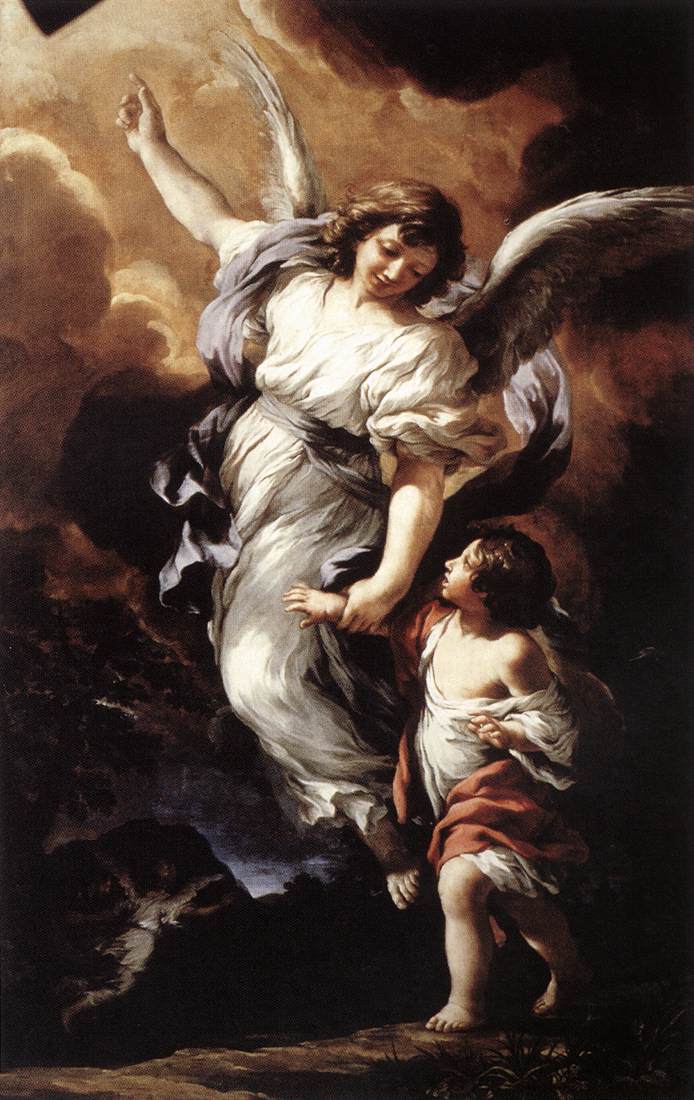
So, here we go. A persona poem from beyond the grave by someone I only know from family stories.

Gerardo, My Dead Brother, Speaks
Gerardo, born premature, lived a week.
Family legend says he visited our house,
invisible, only heard, pointed out by me.
I have been your guardian angel, brother,
for the last sixty years, protecting you
from mishap and danger. Yes, those wings were me,
those wings heard by you and by our mother
and father that time when you were only two.
You called, "Ahdo, Ahdo," identifying me correctly.

We have been together ever since, because the Lord
assigned me to be your keeper. When the car missed you
when you were six — all those other times — because of me
you lived. My motto all your life has been simply one word:
                                                        We . . . always we . . .

—Draft by Vince Gotera    [Do not copy or quote . . . thanks.]

This is a curtal sonnet, a form invented by Gerard Manley Hopkins in the 1800s. Shrinking the line count and pattern of the Petrarchan sonnet, 8 + 6 (an octave followed by a sester), Father Hopkins fashioned a smaller ("curtal") form with a sestet and a quatrain plus a half-line, 6 + 4 1/2. Pretty tight little form. The rhyme scheme I use above is modeled after one of his most famous curtal sonnets, "Pied Beauty": abcabc dbcdc. Fun form. Give it a try.

Having been raised Catholic, I remember hearing about guardian angels often. It was something all of us Catholic kids took for granted, that each of us had a guardian angel. How one got one was something we never asked about; having a guardian angel was like having a right hand — you just had one. And the reason you had a right hand still, the reason it hadn't been chopped off somehow, was because you had a guardian angel. Perfect logic. QED.

Pietro da Cortona
"The Guardian Angel" (1656)

And now on to Alan's poem for today. His intro: "Here's a family poem for the holiday."

Syrup

One day before they moved to Hanceville, Mom
took Lynn and me to visit our Aunt Kate
in Holly Pond. She and her husband lived
next door to cotton fields; as girls, my Mom
and Kate had picked by hand long rows
of cotton many years, and, even now,
should Mom and I drive by a field machines
have harvested, she’ll say her dad would not
have let them leave so much behind, the white
clean fiber, partial bolls, it costs too much
to get. My Uncle Bobby’s hardware store
in Hanceville he inherited had kept
him from the fields, and Lynn and I, town boys,
were curious to pull the cotton loose,
in spite of pricking fingers as we picked,
and soon, our small hands full, we pulled apart
and wadded up the white to make ourselves
old men, mustachioed, our eyebrows white
until the wind pulled all away. For lunch
Aunt Kate had made spaghetti, sauce as sweet
as candy (sweet tooths weren’t uncommon; both
sides of my family fall on a cake
like famished castaways) and then dessert:
she made some chocolate syrup poured
on biscuits, melted butter on the top.
Somehow, I don’t know how, she cooked
the syrup so it started hardening
and made a candy by mistake, and Lynn
and I, of course, believed it was the best
we’d ever had, and she, a newlywed,
was vexed. But fifty years ago (about),
how could I say there’s no bad love
with fork and biscuit like a lollypop?

—Draft by Thomas Alan Holmes     [Do not copy or quote . . . thanks.]

Such a wonderful memory, how a mistake can be real and positive in retrospective. You describe the sweetness — both tangible and intangible — so clearly. Bravo, Alan.


Won't you comment, please, friends? To make a comment, look for a blue link below that says Post a comment; if you don't see that, look in the red line that starts Posted by Vince and click on the word comments.

Go hug your family members. Ingat, everyone.   ヅ


POEM-A-DAY 2014 • Pick a day in April: 1 2 3 4 5 6 7 8 9 10 11 12 13 14 15 16 17 18 19 20 21 22 23 24 25 26 27 28 29 30


13th floor elevators (1) 3d (1) 9/11 (4) a schneider (1) abecedarian (14) aboriginal art (1) acrostic (7) adelaide crapsey (1) african american (1) aids (1) aisling (1) al robles (2) alberta turner (1) alex esclamado (1) alexander chen (1) alexander pushkin (1) alexandra bissell (1) alexandrines (4) alien (1) alliteration (3) alphabet (1) alphabet poem (2) altered books (1) altered pages (2) altered reality magazine (2) amanda blue gotera (7) amelia blue gotera (6) american gothic (1) american sonnet (1) amok (1) amy lowell (1) anacreon (1) anacreontics (1) anaphora (4) andre norton (1) andrea boltwood (19) andrew davidson (1) andrew marvell (1) andrew oldham (1) andy warhol (1) angelina jolie (1) angels (1) animation (1) anna montgomery (3) anne reynolds (1) annie e. existence (1) annie finch (2) anny ballardini (1) anti- (1) antonio taguba (2) apophis (1) aprille (1) art (7) artemis ii (1) arturo islas (1) asefru (1) ash wednesday (1) asian american (4) assonance (3) astronomy (2) aswang (13) aswang wars (1) atlanta rhythm section (1) axolotl (1) bakunawa (1) balato (1) ballad (4) barack obama (7) barbara jane reyes (1) barry a. morris (1) bass (3) bataan (5) becca andrea (1) beetle (2) belinda subraman (2) benjamin ball (1) beowulf (2) best american poetry (1) beverly cassidy (1) bible (1) bill clinton (1) billy collins (2) blackout poetry (1) blank verse (12) bob boynton (1) body farm (1) bolo (1) bongbong marcos (3) bop (1) brandt cotherman (1) brian brodeur (2) brian garrison (1) bruce johnson (1) bruce niedt (6) buddah moskowitz (2) buddy holly (1) burns stanza (1) caleb rainey (1) callaloo (1) candida fajardo gotera (5) cardinal sin (1) carlos bulosan (1) carlos santana (2) carmina figurata (4) carolina matsumura gotera (1) caroline klocksiem (1) carrie arizona (3) carrieola (3) carriezona (1) catherine childress pritchard (1) catherine pritchard childress (37) catullus (1) cebu (1) cecilia manguerra brainard (1) cedar falls (6) cedar falls public library (1) cento (1) charles a hogan (2) ChatGPT (1) cherita (1) chess (2) childhood (1) children's poetry (1) China (1) chorus of glories (1) chris durietz (1) christmas (2) christopher smart (1) chuck pahlaniuk (1) cinquain (1) civil rights (1) clarean sonnet (2) clarice (1) classics iv (1) cleave hay(na)ku (2) clerihews (3) cliché (1) common meter (1) computers (1) concrete poem (2) concreteness (1) consonance (6) coolest month (1) cory aquino (2) couplet (6) couplet quatrains (2) crab (1) craft (5) creative nonfiction (1) crewrt-l (1) crown of sonnets (1) crucifixion (1) curtal sonnet (89) dactyls (2) daily palette (1) damián ortega (1) dan hartman (1) danielle filas (1) dante (5) dashiki (1) david foster wallace (1) david hoffman (1) david kopaska-merkel (1) david shaw (1) david wojahn (1) de jackson (2) decasyllabics (4) denise duhamel (1) deviantART (3) dick powell (1) diction (1) didactic cinquain (1) dinosaur (2) disaster relief (1) divine comedy (1) django reinhardt (1) dodecasyllables (1) doggerel (2) doggie diner (1) doidotsu (1) don johnson (1) donald justice (1) donald trump (8) double acrostic (1) dr who (3) dr. seuss (1) draft (2) dragon (1) dragonfly (17) dreams & nightmares (1) drug addiction (1) drums (1) duplex (1) dusty springfield (1) dylan thomas (1) e e cummings (1) e-book (1) earth day (1) ebay (2) eclipse (5) ecopoetry (1) ed hill (1) edgar allan poe (2) edgar lee masters (1) edgar rice burroughs (1) editing (1) eeyore (1) eileen tabios (9) ekphrasis (3) ekphrastic poem (19) ekphrastic review (1) election (2) elegy (4) elevenie (1) elizabeth alexander (2) elizabeth bishop (4) elvis presley (1) emily dickinson (9) emma trelles (1) end-stop (3) english sonnet (1) englyn milwer (1) enita meadows (1) enjambed rhyme (1) enjambment (5) enola gay (1) envelope quatrain (2) environment (1) epulaerya (1) erasure poetry (10) erin mcreynolds (4) ernest lawrence thayer (1) exxon valdez oil spill (1) f. j. bergman (1) f. scott fitzgerald (1) facebook (3) family (4) fanny (1) fantasy (1) fashion (1) ferdinand magellan (2) ferdinand marcos (5) fib (3) fiction (3) fiera lingue (1) fighting kite (4) filipino (language) (1) filipino americans (6) filipino poetry (1) filipino veterans equity (3) filipinos (5) film (3) final thursday press (1) final thursday reading series (2) flannery o'connor (3) florence & the machine (1) flute (1) fortune cookie (1) found poem (1) found poetry (6) found poetry review (2) fourteeners (1) fox news (1) frank frazetta (1) frankenstein (1) franny choi (1) fred unwin (1) freddie mercury (1) free verse (13) fructuosa gotera (1) fyodor dostoevsky (1) gabriel garcía márquez (1) gambling (1) garrett hongo (1) gary kelley (1) gaston nogues (1) gawain (2) genre (1) george w. bush (1) gerard manley hopkins (13) ghazal (3) ghost wars (6) ghosts of a low moon (1) glossalalia (1) gogol bordello (1) golden shovel (5) goodreads (1) google (1) gotera (1) grace kelly (1) grant tracey (1) grant wood (11) grateful dead (1) greek mythology (1) gregory k pincus (1) grendel (1) griffin lit (1) grimm (1) grinnell college (2) growing up (1) growing up filipino (2) guest blogger (1) guillaume appolinaire (1) guitar (9) gulf war (1) gustave doré (3) guy de maupassant (1) gwendolyn brooks (4) gypsy art show (1) gypsy punk (1) hades (1) haggard hawks (1) haibun (5) haiga (1) haiku (34) haiku sonnet (3) hank williams jr. (1) hart crane (1) hawak kamay (1) hay(na)ku (24) hay(na)ku sonnet (16) header (1) hearst center for the arts (2) heirloom (1) herman melville (1) heroic couplets (1) hey joe (1) hieronymus bosch (1) hiroshima (1) hiv here & now (1) homer (1) honky tanka (1) how a poem happens (2) humboldt state university (1) humor (1) hybrid sonnet (4) hymnal stanza (1) iain m. banks (1) iamb (1) iambic pentameter (1) ian parks (1) ibanez (1) icarus (1) imagery (1) imelda marcos (4) immigrants (1) imogen heap (1) indiana university (1) inigo online magazine (1) ink! (1) insect (2) insects (1) international hotel (1) international space station (1) interview (4) introduction (2) iowa (2) iowa poet laureate (11) iran (1) iran-iraq war (1) irving levinson (1) italian bicycle (1) italian sonnet (2) ivania velez (2) j. d. schraffenberger (4) j. i. kleinberg (3) j. k. rowling (1) jack horner (2) jack kerouac (1) jack p nantell (1) jackson pollock (1) james autry (1) james brown (1) james galvin (1) james gorman (2) james joyce (1) jan d. hodge (2) janis joplin (1) japan (1) jasmine dreame wagner (1) jeanette winterson (1) jedediah dougherty (1) jedediah kurth (31) jennifer bullis (1) jesse graves (1) jessica hagedorn (1) jessica mchugh (2) jim daniels (1) jim hall (1) jim hiduke (1) jim o'loughlin (2) jim simmerman (3) jimi hendrix (3) jimmy fallon (1) joan osborne (1) joe mcnally (1) john barth (1) john charles lawrence (2) john clare (1) john donne (1) john gardner (1) john mccain (1) john prine (1) john welsh iii (2) johnny cash (1) joseph solo (1) josh hamzehee (1) joyce kilmer (1) justine wagner (1) kampilan (1) kate greenaway (1) kathleen ann lawrence (1) kathy reichs (1) kay ryan (2) keith welsh (1) kelly cherry (1) kelly christiansen (1) kenning (1) kennings poem (3) killjoy (1) kim groninga (1) kimo (6) king arthur (1) king tut (1) knight fight (1) kumadre (1) kumpadre (1) kurt vonnegut (1) kyell gold (1) landays (1) lapu-lapu (2) lapwing publications (1) laurie kolp (2) leigh hunt (1) leonardo da vinci (2) les paul (1) leslie kebschull (1) lester smith (1) library (1) library of congress (2) limerick (3) linda parsons marion (1) linda sue grimes (2) lineation (6) linked haiku (9) linked tanka (3) list poem (5) little brown brother (1) little free libraries (3) lorette c. luzajic (1) lost (tv) (1) louise glück (1) luis buñuel (1) lune (2) lydia lunch (1) lynyrd skynyrd (1) machismo (1) magazines (1) magnetic poetry (1) mah jong (1) man ray (1) manananggal (2) manong (3) margaret atwood (2) maria fleuette deguzman (1) marianne moore (1) marilyn cavicchia (1) marilyn hacker (1) mark jarman (1) marriage (1) martin avila gotera (18) martin klein (1) martin luther king jr. (1) marty gotera (5) marty mcgoey (1) mary ann blue gotera (9) mary biddinger (1) mary roberts rinehart award (1) mary shelley (1) matchbook (1) maura stanton (1) maureen thorson (446) maurice manning (2) meena rose (3) megan hippler (1) melanie villines (1) melanie wolfe (1) melina blue gotera (3) mental illness (1) metapoem (1) meter (7) mfa (2) michael heffernan (3) michael martone (2) michael ondaatje (1) michael shermer (2) michael spence (1) michelle obama (1) mickey mouse (1) micropoem (1) middle witch (1) minotaur (1) mirror northwest (1) misky (1) molossus (1) monkey (1) monorhyme (4) monostich (1) monotetra (3) morel mushrooms (2) mueller report (1) muhammad ali (1) multiverse (1) murder ballad (1) mushroom hunting (1) music (3) muslim (1) my custom writer blog (1) myth (1) mythology (3) nagasaki (1) naked blonde writer (1) naked girls reading (1) naked novelist (1) napowrimo (453) narrative (2) nasa (1) natalya st. clair (1) nathan dahlhauser (1) nathaniel hawthorne (1) national geographic (3) national poetry month (451) native american (1) neil gaiman (2) neoformalism (1) New Formalists (1) New York School (1) nick carbó (5) ninang (1) nonet (1) north american review (7) north american review blog (2) ode (1) of books and such (1) of this and such (1) onegin stanza (2) ottava rima (2) oulipo (1) oumumua (1) ovillejo (2) pablo picasso (2) pacific crossing (1) padre timoteo gotera (1) painting (1) palestinian american (1) palindrome (1) palinode (1) palmer hall (2) pantoum (3) paradelle (2) paranormal (1) parkersburg iowa (1) parody (7) parody poetry journal (1) parol (1) pastoral poetry (1) pat bertram (2) pat martin (1) paul brooke (1) paul maccready (1) paula berinstein (1) pause for the cause (2) pca/aca (1) peace (2) peace of mind band (1) pecan grove press (2) pentameter (1) pepito gotera (1) percy bysshe shelley (2) performance poetry (1) persephone (1) persona poem (3) peter padua (1) petrarch (1) petrarchan sonnet (27) phil memmer (1) philip larkin (1) philippine news (1) philippine scouts (6) philippine-american war (1) philippines (8) phish (1) pinoy (1) pinoy poetics (1) pixie lott (1) podcast (1) podcasts (3) poem-a-day challenge (451) poetics (6) poetry (5) poetry imitation (1) poetry international (1) poetry palooza (4) poetry reading (4) poets against (the) war (2) pop culture (2) popcorn press (1) prejudice (1) presidio of san francisco (1) prime numbers (1) prime-sentence poem (1) prince (3) princess grace foundation (1) promotion (1) prose poem (7) proverbs (1) pterosaur (1) ptsd (2) puppini sisters (1) puptent poets (2) pushkin sonnet (3) pyrrhic (1) quadrille (1) quadrille quaiku (1) quatrain (4) quatrains (1) r.e.m. (1) rachel morgan (3) racism (1) rainer maria rilke (1) rap (2) rattle (1) ray fajardo (1) ray harryhausen (1) reggie lee (1) rembrandt (1) ren powell (1) renee lukehart wilkie (1) reverse golden shovel (1) reviews (1) revision (1) rhyme (8) rhysling awards (5) rhythm (1) richard fay (1) richard hugo (1) rick griffin (1) rime (1) rime couee (1) rippled mirror hay(na)ku (1) robert bly (1) robert frost (3) robert fulghum (1) robert j christenson (1) robert lee brewer (454) robert mezey (1) robert neville (1) robert zemeckis (1) rock and roll (2) rod con (1) roger zelazny (1) rolling stones (1) romanian (1) ron kowit (1) ronald wallace (2) rondeau (1) ross gay (1) roundelay (1) rubaiyat (1) rubaiyat sonnet (1) run-d.m.c. (1) saade mustafa (1) sally ann kueker (2) salt publishing (1) salvador dali (4) san francisco (8) sandra cisneros (1) santa claus (1) santana (1) sapphics (1) sarah deppe (1) sarah palin (1) sarah smith (26) sascha feinstein (1) satan (1) sayaka alessandra (1) schizophrenia (1) science fiction (2) science fiction poetry association (1) science friction (1) scifaiku (2) scott walker (1) screaming monkeys (1) scripture (1) sculpture (1) sea chantey (1) seamus heaney (1) sena jeter naslund (1) senryu (5) sesquicentennial poem (1) sestet (1) sestina (13) sevenling (1) shadorma (10) shaindel beers (2) shakespeare (1) shakespearean sonnet (10) shakespearen sonnet (1) sharon olds (2) shawn wong (1) shiites or shia (1) shoreline of infinity (1) sidney bechet (1) sijo (2) skateboard (1) skeltonics (2) skylaar amann (1) slant rhyme (6) slide shows (1) small fires press (1) smashing pumpkins (1) sniper (1) somersault abecedarian (1) somonka (1) sonnet (50) sonnet corona (1) sonnetina (4) soul (1) southeast asian american (1) spanish (1) specificity (1) speculative poetry (1) spenserian stanza (1) spiraling abecedarian (1) spondee (1) spooky (1) sprung rhythm (1) st. patrick's day (2) stafford challenge (99) stanford university (1) stanley meltzoff (1) stanza (1) star wars (3) stars and stripes (2) stereogram (1) steve hazlewood (1) steve mcqueen (1) stevie nicks (1) stone canoe (2) sue boynton (1) suite101 (2) sunflowers (1) supremes (1) surges (1) susan l. chast (1) syllabics (1) sylvia plath (2) synesthesia (1) syzygy poetry journal (2) t. m. sandrock (1) t. s. eliot (2) tail rhyme (1) tamandua (1) tanaga (1) tanka (38) tanka prose (4) tanka sequence (6) tanya tucker (1) tarzan (1) taylor swift (1) teaching creative writing (2) ted kooser (1) tercet (1) term paper mill (1) terrance hayes (2) terza rima (10) terza rima haiku sonnet (8) terzaiku sonnet (4) terzanelle (1) tetrameter (1) the byrds (1) the coolest month (1) the language of flowers (1) the warning (1) the who (1) theodore roethke (1) thomas alan holmes (276) thomas crofts (4) thomas faivre-duboz (1) thomas hart benton (1) thunderstorm (1) thurifer (1) tiger (1) tilly the laughing housewife (1) time travel (1) tokyo groove kyoshi (1) tom perrotta (1) tom petty (1) tom phillips (1) tone hønebø (1) toni morrison (2) tornado (1) total eclipse (4) tower of power (2) translation (2) translitic (4) tribute in light (1) trickster (1) tricube (1) triolet (8) triskaidekaphobia (1) tritina (1) trochee (1) trope (1) tucson (1) typhoon haiyan (1) typhoon yolanda (1) university of northern iowa (7) unrhymed sonnet (2) us army (8) uvalde sonnet (1) valentine's day (1) vampire (2) ven batista (29) verses typhoon yolanda (1) veterans' day (2) via dolorosa (1) video poetry (6) vietnam era vet (1) vietnam war (8) viktor vasnetsov (1) villanelle (6) vince del monte (1) vincent van gogh (1) virgil wren (1) virtual blog tour (1) visual poetry (3) vladimir putin (1) voices and echoes.amelia blue gotera (1) volkswagen (1) w. somerset maugham (1) walking dead (1) wallace stevens (3) walt mcdonald (1) walt whitman (4) war (7) war in afghanistan (2) war in iraq (2) wartburg college (1) waterloo (1) whypoetrymatters (1) wile e. coyote (1) wilfred owen (2) william blake (1) william carlos williams (1) william f tout (1) william gibson (1) william morris (1) william oandasan (1) william shakespeare (3) william stafford (4) willie nelson (1) wind (1) winslow homer (1) winter (1) women's art (1) wooster review (1) wordy 30 (1) writing (1) writing away retreats (1) writing show (1) wwii (6) young adult (1) yusef komunyakaa (7) zipode (1) zone 3 (1)